‘Good design is good business’: Paul Hirsch on three decades in advertising

The MX Group chief creative officer reflects on key moments from his decades-long career, including his “master class in advertising” with Goodby, Silverstein & Partners in the 90s.
Paul Hirsch has always been guided by the philosophy that “good design means good business.” It stems from his early years, with parents who both worked as designers and had their own studio in Chicago, where they lived. “My dad went to art school and, from an early age, did graphic design. I always had a deep appreciation for it,” Hirsch explains. “I would go into his office and steal his books”.
This early exposure led the youngster to also pursue a career in the creative field, obtaining a place at the University of Illinois on its advertising course. “It was absolutely worthless,” he jokes, “because it’s all about your portfolio”.
The first job Hirsch ever landed in advertising was on the account side, as a junior account executive, but he was naturally drawn to the creative energy and often found himself gravitating toward the creative department, much to the confusion of those around him. That curiosity eventually led him to enroll in a night class at Leo Burnett to start building a proper portfolio.
He still recalls advice from an instructor that stuck with him, not because it was particularly profound but because it was funny and true in its own way: “The first thing you want to do when you come up with a TV spot is put a palm tree in it, because that way, when it’s time to shoot, you can go somewhere warm.”
As he puts it, from then on he was “off to the races” and eventually landed a job as an art director at Goodby, Silverstein & Partners in 1996, where he would hone his craft for six years working on campaigns for Nike, Porsche and Doritos, to name a few. Since then, Hirsch has enjoyed working in major advertising cities in the US, “ping-ponging” between New York, San Fransico and Chicago.
Brilliantly crafted work is a huge driver in everything that Hirsch does. He’s a believer in advertising legend Howard Gossage’s tenet, “People don’t read ads. They read what interests them.” People consume whatever is put in front of them. These days, that often means endlessly scrolling through Instagram or TikTok feeds. He adds that what catches their attention in that moment might be a funny video, a friend’s post or, occasionally, an ad.
That’s why the old Gossage idea still holds up. “He’s old-school San Francisco, a pioneer of that San Francisco advertising family tree,” he explains. But what Gossage said decades ago feels just as relevant today, especially in a media landscape where everything is clickable, streamable and skippable. “People are going to stop and watch stuff they want.”
And that, in his view, is the challenge: “Our job is to try and get them to stop and read a little bit before they move on.” Because at the end of the day, advertising is still an intrusion. “It’s not like people are looking for the billboard on the side of the road or the ad on a website. That’s why everyone pays for streaming services, because if they had the option to do it without ads, they would.”
Advertising, as Hirsch sees it, isn’t like most careers. “It’s a bit of a rented tux business,” he says. “It’s not like other businesses, where people spend their entire careers at an agency.” Moving around, he believes, has been one of his greatest assets, exposing him to different styles, philosophies and people.
Working in San Francisco under Jeff Goodby and Rich Silverstein was a “master class in advertising,” he recalls. “Not just in making great work, but in understanding the business of it. Because great ideas mean nothing if they don’t get made.”
Creative leadership at the top of an agency equals staying power, he says, pointing to the shops Mischief and Highdive as modern examples of places where founders or creatives still have “a hand on the wheel.” That, he believes, is a key reason they’re thriving.
It’s also what drew him to B2B. When he took the job at Doremus, many people questioned him. “But Doremus had hired Michael Prieve back in the day, my favorite art director from Wieden+Kennedy.” It was a huge opportunity to learn.
The same goes for MX, where he began as chief creative officer this June. He asks, “Why can’t B2B be as interesting as B2C?”
This week, the B2B sector received an unexpected jolt of attention when tech brand Astronomer delivered a master class in handling bad press by responding to ‘Coldplaygate’ with a witty quick-turnaround ad starring Gwyneth Paltrow.
“I thought it was a joke,” says Hirsch. “I thought it was from Comedy Central.” Objectively, thinking an ad is a comedy sketch is a high form of praise. But it leans into Hirsch’s mantra that B2B does not need to be boring.
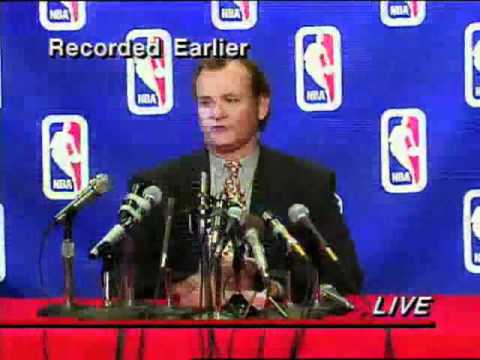
Hirsch isn’t one to reflect too much on the great work he’s made, even if there is a lot. “One of the early highlights was at the NBA, where we convinced Bill Murray to be in a campaign, which was ridiculous,” he says, laughing.
Another standout moment came while working at Leo Burnett on an ad for canned pasta brand Chef Boyardee. “It got a lot of play at the time. The amazing part is, it’s still getting spoofed. It’s a charming spot.”
He encourages people to search it on TikTok. “Type in ‘Rolling Can’ or ‘Chef Boyardee rolling can’ and you’ll see a litany of people mimicking it, with beer cans, with all sorts of things. That spot’s got to be 15, maybe 20 years old and it’s still circling the internet.”

One of his best memories of his career comes from 2010, when he founded his own indie agency, Division of Labor, which was later opened as a storefront. “We had our doors open and we were able to put things in the window that were interesting.”
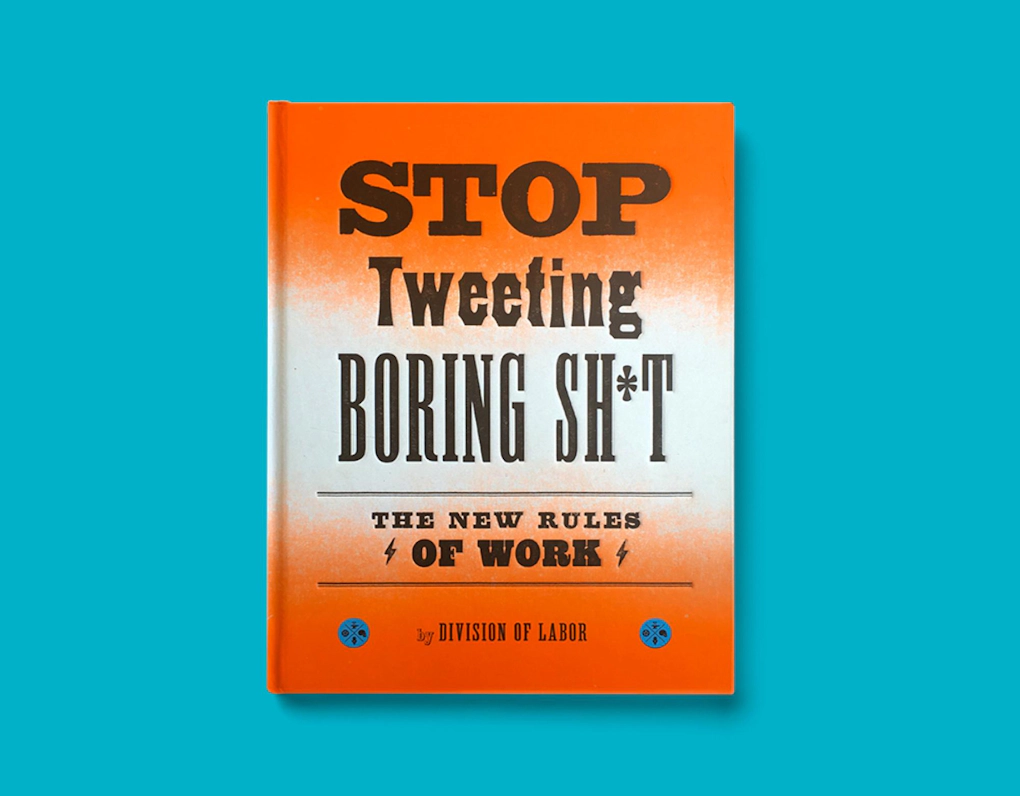
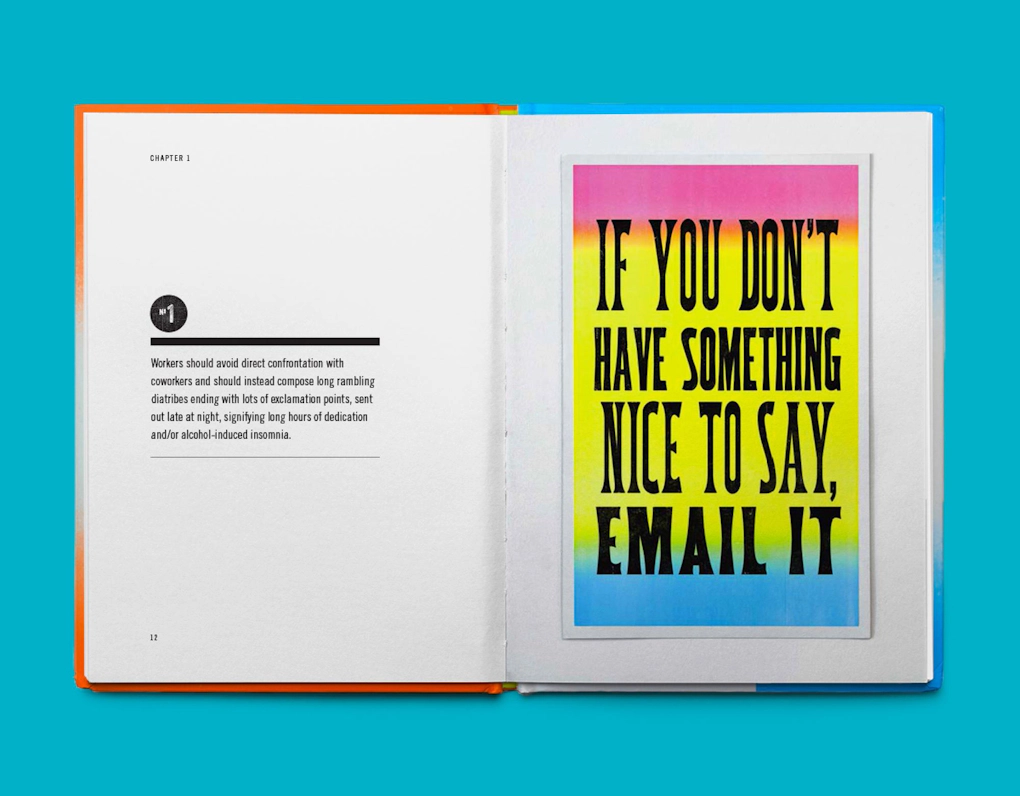
At the time, the team had been writing its own HR manual, filled with one-liners. As a fan of letterpress printing, he had a few of the best quotes made into posters and hung them in the storefront window. “People started asking to buy them,” he says. That interest led to an entire poster series and, eventually, a book.
Chronicle Books published it under the title Stop Tweeting Boring Shit. “It’s still one of the things I’m proud of. Just a reminder that ideas can come from anywhere and if they’re good enough, they live on.”
Throughout his career, Hirsch has always pursued ideas that educate and inform. It’s something especially close to his heart being married to a school teacher and, through his wife’s work with young kids, he’s seen firsthand what “unbridled, no-filter creativity” looks like. “It’s great!”
He believes that same energy is essential to good work in advertising. “As we come up with ideas, whether strategic or creative, if you can try and take off the guardrails, if you can take off the filters and bring something new, that’s where it gets really exciting.”
Suggested newsletters for you
Daily Briefing
Daily
Catch up on the most important stories of the day, curated by our editorial team.
Weekly Marketing
Friday
Stay up to date with a curated digest of the most important marketing stories and expert insights from our global team.
The Drum Insider
Once a month
Learn how to pitch to our editors and get published on The Drum.
link