How Amazon Built The World’s Fastest Growing Ad Business

A quick housekeeping note: On December 3 in New York City, I will be helping to host (and program and moderate) Sabio’s Modern Media Summit. The event will cover everything from a deep dive on the state of data and TV targeting, the latest on multicultural marketing, and the growth of creators running FAST channels. Check it out!
*This post originally appeared in Alex Kantrowitz’s excellent newsletter Big Technology
Amazon’s now-massive advertising business began with a sputter.
“Advertising is the price you pay for having an unremarkable product or service,” Jeff Bezos once famously said.
But seeing the revenue potential in 2006, his executives reluctantly trudged toward the business. They were so ambivalent at first, they outsourced early chunks to Google and Yahoo. Their early ads didn’t always have links. And though Amazon was a massive ecommerce site, advertisers couldn’t tell if their ads led to purchases.
Today, nearly twenty years later, Amazon is an advertising juggernaut. Backed by a massive audience, reams of consumer data, and strong technological chops, the company pulled in $56 billion in advertising revenue in 2024, and another $13.9 billion in Q1 of this year.
Considering that Comcast’s NBCUniversal, which had a hundred year head start, brought in just north of $2.6 billion in ad sales last year, it’s fair to say that Amazon now runs the world’s greatest side hustle
The Duopoly — a term coined for Facebook and Google when they brought in 85 cents of every new digital advertising dollar— is officially dead.
Long live the Triopoly.
It all may seem obvious in hindsight (why wouldn’t a trillion dollar tech company crush it with ads?), but the company’s success was hardly guaranteed. And if not for a series of key decisions, it may never have happened.
Over the next two weeks, we’ll explore how the company built the fastest growing advertising business of all time.
Here’s how Amazon did it:
Officially, Amazon ran its first ‘product’ ads starting in 2006. Fidelity Investments and Ford were among the first advertisers on a very short list.
In those early days, the advertisers had to convince Amazon to take their money.
Former Amazon product lead Melissa Burdick, co-founder and President of Pacvue, remembers getting a call from Unilever, the maker of brands like Axe Body Spray. “I think it was 2008,” she said. “They came to me and said, ‘We want to play our Super Bowl ad on the Amazon home page.’ The challenge was, there were no actual ad placement offerings on the home page.”
“We had to get developers to volunteer time — nights and weekends — to turn a site widget used to showcase authors and musicians into a playable video ad,” said Burdick.
“At the time, [insiders at Amazon] were thinking about [building out an ad business],” she said. “But that was a turning point, when we realized brands wanted to use us as a publisher. We can get brand dollars.”
Still, early hesitancy pervaded.
Robert Coon was an early Amazon Ads hire. Currently the senior vice president, U.S. sales at TripleLift, he recalled a period when simply introducing any standard advertising to Amazon.com “was initially looked at as a scary thing we should never do.” The idea of “linking away from Amazon was thought of as a huge deal breaker,” he said.
Yet Bezos was known for utilizing a thought experiment — in this case imagining what Amazon would look like with advertising — and how that could benefit customers, versus leaving things the way they were.
Ultimately, the team determined that ads could both help with product discovery and drive lower prices for consumers, while of course bringing Amazon more revenue “Who wouldn’t choose that?” Coon said.
One thing that helped sway Bezos was advertising’s profitability potential, which was appealing at a company that had long struggled on that front. Eventually, he put away his strident opposition to ads and pushed forward for earnings.
“Retail is a shitty business,” said one former Amazon Ads exec. “Advertising has 40%-plus margins. They started saying, ‘what if all that drops to the bottom line?’”
To help kick start ad sales, Amazon started by leaning on its relationships with the brands that sold products on Amazon. Yet that put Amazon’s vendor managers (the team that bought, promoted, and sold products on Amazon.com’s marketplace) at odds with its new group of ad sales executives.
“They were total oil and water,” Burdick said. “There was a lot of fighting over dollars from the brands. It was the vendor managers who were aggressively securing merchandising co-op dollars vs. the sales executives capturing advertising dollars.”
Eventually, Amazon installed a bridge team to help foster those relationships, and the ad business started to grow. But there was no clear vision of taking over the ad world.
“No one’s thinking about Meta and Google at the time,” Burdick said. “There was a head-in-the-sand approach to things, which frankly, also kept them focused on their own business.”
Search ads in particular promised excellent margins. Yet Amazon started selling only display ads (e.g. banner ads). The search ad business had proven to be massively successful for Google, yet these kinds of ads were seen as anti-Amazon, because the e-commerce platform’s philosophy was always centered around customer choice. “No one wanted to be seen as leading consumers,” said one former executive.
Plus, there was the internal resistance to doing what Google does, Amazon cared about customers and invention, it was dead set against copying competitor products. “They hated it being called search,” recalls one ex-Amazon employee. “They had to act like they invented a new thing.”
And unlike via a typical search engine, Amazon had to make sure that search ads only showed up when specific products were in stock, and ideally when those products had strong customer ratings, a complex undertaking given how many millions of sellers the company houses.
“That took years of testing,” said the executive.
But eventually, Amazon insiders bent their thinking.
As bigger brands started to push for more options, search ads (called Sponsored Listing) were released into the wild, and quickly “reached escape velocity.”
“Then the whole company got behind us,” said the insider.
Soon, as the story goes, Bezos got advertising religion, asking leadership for a five-year plan for a billion dollar ad business, at a time when the company was doing less than $100 million per year.
Coon recalled a meeting between his sales team and senior leadership when it became clear that the climate had shifted. The sellers were feeling good about that fact that Amazon, for certain brands, was already garnering 40% of their digital ad spend.
“My boss said to us, ‘I want 40% of their marketing spend — not 40% of digital.’ We thought we were thinking big, but things had definitely changed.”
As Amazon ramped up its ad business, its internal technology was a mess.
Part of the company’s culture was to start new businesses with smaller, “two pizza teams” — as in, you could feed the group with just two pizzas — so it ended up building a bunch of different, disconnected systems.
The company had one group selling to large brands, another selling to smaller, independent, brands. Each had their own user-interface for managing ad inventory, featuring different functionality, and different underlying technology. To serve ads on Amazon.com itself, the company needed to use Google’s technology.
“Trying to deploy features across these things was brutal,” said a former Amazon ad executive. But it was typical Amazon, where different fiefdoms are empowered to take on new projects, leaving the overlaps and integrations to be figured out later.
Eventually, the company developed Project Barnum, an initiative aimed at brand and product simplification. “We needed to simplify the back-end tech,” one ex-Amazon product manager recalled.
Meanwhile, Amazon started to realize it would eventually run out of room for ads on Amazon.com, so it experimented using its data on third-party ad platforms to sell ads across the rest of the web.
Amazon also rolled out APIs for search ads (initially called Amazon Marketing Services API), enabling advertisers to buy ads on its properties via outside technology.
And in 2012, the company introduced Amazon Ad Platform, its own tool advertisers could use to buy ads on Amazon.com.
Most executives see this series of decisions as pivotal for growth.
“We had gone to market as a publisher, selling sponsorship packages,” said one early Amazon Ads hire. “We were not a platform. This let us take a performance media approach. What nobody really understood at the time is that it would lead to a multi-billion dollar business.”
The team then got to work building the holy grail of digital advertising: Helping advertisers track whether their ad spending was leading to purchases.
For decades, brand and ad agencies have been able to gauge the effectiveness of their ad budgets through proxy metrics and educated assumptions. For example, looking at how weekly sales performed amid a heavy TV ad buy. There’s also been a long history of third-party research companies that promise to help brands connect ad activity with some measure of consumer impact (whether that’s awareness of a product, consumers’ opinion, or sales). This cottage industry of ad “attribution” businesses, while well established, was never able to perfectly determine the effectiveness of a given ad campaign.
Even Google or Facebook ads — as effective and trackable as they are — haven’t been able to precisely track when a customer makes a purchase because they generally send people to other commerce sites.
But on Amazon, ad views were happening in the same place as actual purchases. There was no ‘gap’ between exposure and action. A brand could run ads on Amazon and the company would immediately know which consumers clicked on them, and who bought something.
Yet initially, Amazon didn’t have a system in place to share such data. “That was deliberate,” said one former seller. “We were nervous about pushing this. We thought, ‘Why sell ourselves short?’”
Plus, Amazon was averse to helping users leave Amazon.com.
That started to change once Amazon gained accessing bigger advertising budgets, and got the attention of Chief Marketing Officers, who were under big pressure to prove the impact of their spending
“Once we got to CMOs, that was our ace in the hole,” recalls this seller. “Once we launched attribution, well, even Google didn’t have that.”
Amazon’s advertising magic was in its ability to drive and measure purchases, but to crack the biggest marketing budgets, it had to push into video, particularly given that most people don’t actually spend much time with Amazon.
But Amazon’s big foray into video, Prime Video (launched as Amazon Instant Video in 2011) was designed to be ad-free, a streaming service aimed at attracting more Prime members, not advertisers.
Amazon did take a swing at a reality series, Fashion Fund, which featured Vogue editor Anna Wintour, and several brand integrations.
“It was not well received,” said one former staffer.
It would be two years before Amazon tried another video ad push, with the introduction of IMDB TV (which eventually became “Freevee”). Yet the company did make two alternative moves which allowed it to build credibility in this sector.
In 2014, Amazon won a bidding war against Google to acquire Twitch, thrusting it into the live streaming/influencer sector.
It also made a “stealth move” by launching Fire TV that year.
“Roku was running away with that market,” said one ex Amazon employee. “This was a big move, and it laid the groundwork for [a bigger TV play].”
Amazon started getting ad money from the HBO Gos of the world, as Fire was able to help drive distribution while using closed loop attribution data.
“We were bigger than Roku and no one knew it,” said one exec. “And we were now acting like a media platform.”
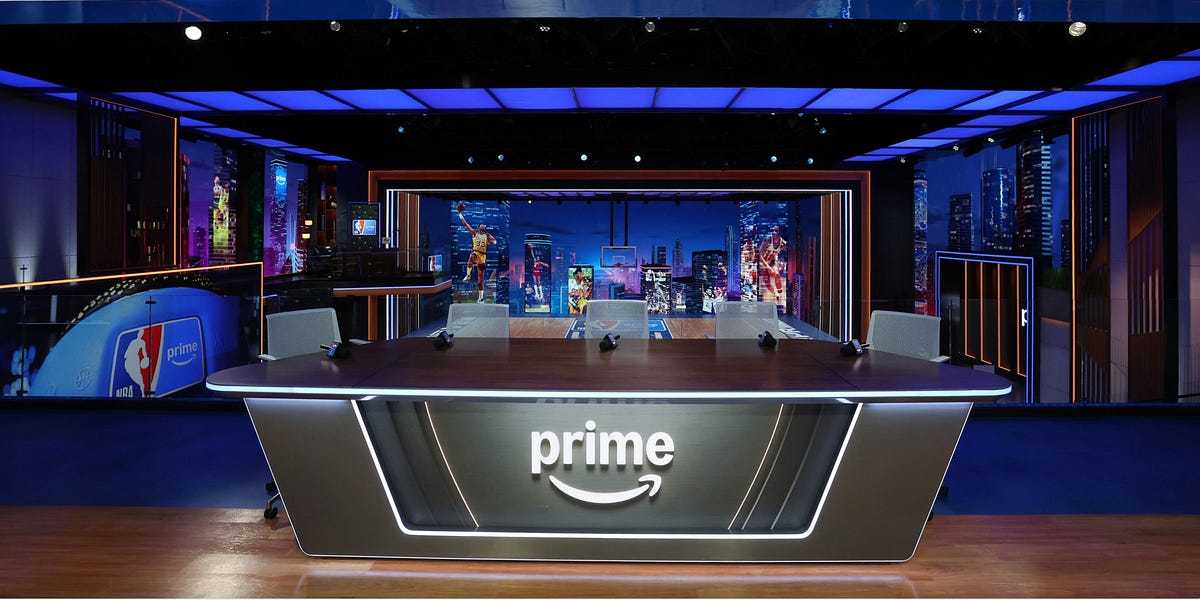
By 2021, it was time to take things up a notch, the biggest notch in media. Amazon landed the exclusive streaming rights to the NFL’s Thursday Night Football.
Given that NFL games are the last bastion of live TV viewing by large audiences, the move put the company into another advertising stratosphere. Yet the Amazon team had to learn a new sport, so to speak.
“You had all the Prime video guys, product leaders, who suddenly had the job of folding this live sports thing in, and they didn’t know anything. They have all these expectations about how this should go down, but they were detached from the industry.”
Instead of using tech and data to sell to thousands of small brands, suddenly Amazon needed to dive into wining and dining huge sports sponsors. That caused some internal strife.
“We were learning the hard way,” said the former seller.
Amazon proved to be a quick study. By 2024 the ecommerce giant was one of several media companies to ink a deal to stream NBA games, starting next season.
It’s funny to recall now that until 2022, Amazon didn’t even break out advertising in its earnings reports, showing that revenue in its ‘other’ category. In the years leading up to that moment, Amazon maintained a muted presence at major Madison Avenue events. In June of that year, Amazon debuted its own ‘port’ at the Cannes Lions Advertising Festival in France.
Today, if you’re sell something online, you must advertise on Amazon, otherwise you’re essentially invisible.
In fact, over the past few years, Amazon’s ad growth has led to the explosion of an entirely new ad category — retail media — which includes the likes of Target, Walmart, and Instacart chasing an estimated $177.1 billion global market, per the media buying firm GroupM.
Ironically, “I think the biggest catalyst for the ad business was the pandemic,” said Sammy Rubin, head of Growth Strategy & Integrated Marketing at the agency Wpromote. “Marketers needed growth. They had this catch 22 as to whether to invest in brand or drive sales. And we saw consumer packaged goods brands-double down on retail media. They found success, and other verticals followed. Plus, Prime streaming service also popped up [during lockdowns].”
Today, Amazon Ads leaders don’t talk about search ads, or commerce promotions, but rather delivering “the full funnel” to marketers, meaning they claim they can reach a person during every step of their ‘relationship’ with a brand – from when they first learn about a product, to when they begin to consider making a purchase, to ultimately pulling the trigger.
The cluttering of Amazon’s services with ads does call into question the team’s original rationale for building the business. Its customers are now beset by ads wherever they turn on Amazon properties, not exactly a value add. But for a company obsessed with customers, the definition of who its customers are is expanding, and it seems okay with degrading the experience for its original customers to serve its new ones.
If it wasn’t clear that Amazon was all-in on advertising, any doubt was likely dispelled when last year, they company flipped the switch on Prime Video, making an ad-supported experience the default for all subscribers (you can pay more for an ad-free version). Analysts predicted that move would generate an extra $7 billion in revenue overnight, and early indications are that Amazon has already shaken up pricing in the TV market. In fact, Amazon recently quietly moved to double the ad load on Prime, reported Adweek.
“If you look at things overall, you start to see they’ve been following consumer behavior, and now they have this 360 media offering around first party data,” added Rubin. ”It took them a long time to integrate this stuff, but by 2024, they’re saying, “We’re not a distribution platform. We’re a media company.”
It’s a story many didn’t see coming. Most Amazon ad executives agree there was never a master plan that was telegraphed to the world, which in a weird way, helped the business grow under the radar. Today, while Amazon’s cloud division appears to be its highest margin business, CFO Brian Olsavsky called out advertising as “an important contributor to profitability.”
“We got to build it without breaking it out of Amazon,” said a former Amazon ad leader. “That way, Google didn’t see it.”
link