Humans vs. Robots: Navigating Uncertainty in Hotel Service Encounters
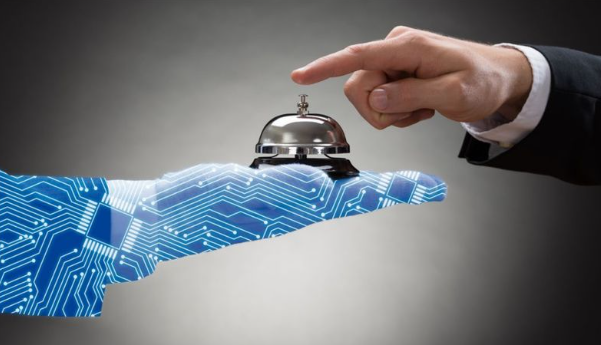
Study explores how service robots and human staff are perceived under different levels of service uncertainty in hospitality
Research Corner | A partnership between Macau Business and the Macao University of Tourism (UTM)
A joint study conducted by researchers from The Hong Kong Polytechnic University, the Macao University of Tourism, and the University of Macau explored how hotel guests respond to human versus robotic service agents when faced with different levels of uncertainty during service encounters.
With AI-driven service robots becoming gradually more common in hotels worldwide, especially during off-hours, hospitality operators are increasingly interested in understanding how and when to employ robots versus human staff in a way that boosts client satisfaction. This study, led by Janelle Chan, with Irene Cheng Chu Chan, Long W. Lam, and Rob Law, offers fresh data and perspectives on that decision.
Drawing on uncertainty management and service encounter needs theories, the researchers conducted two experimental studies—one in China and another in the UK. Participants were shown animated hotel check-in scenarios featuring either a human or a robot front-desk agent. Some guests made simple requests (low uncertainty), while others posed complex or ambiguous demands (high uncertainty).
The findings reveal that robots are preferred over humans when service requests are unpredictable or unclear. Guests viewed robots as more capable and useful in handling uncertain service outcomes, likely due to their consistent and programmed responses. Conversely, when requests were routinary and the outcomes predictable, human staff were perceived to offer stronger rapport and emotional connection, leading to higher customer satisfaction.
The study highlights a key insight: customer satisfaction does not just depend on whether service is provided by a robot or a human, but on the context of the service request. When guests are uncertain about the outcome, such as organizing unique experiences or dealing with ambiguous requests, they tend to value utility over empathy—an area where robots show better results.
In contrast, when expectations are clear and outcomes predictable—like getting dining suggestions or directions—guests prefer the warmth and interpersonal connection that human staff provide.
These results underline the need for a hybrid approach in hospitality service delivery, where robots and humans are deployed based on the complexity and emotional nature of guest needs.
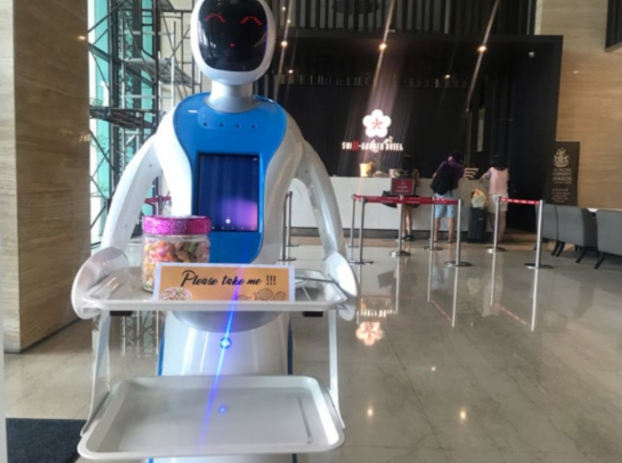
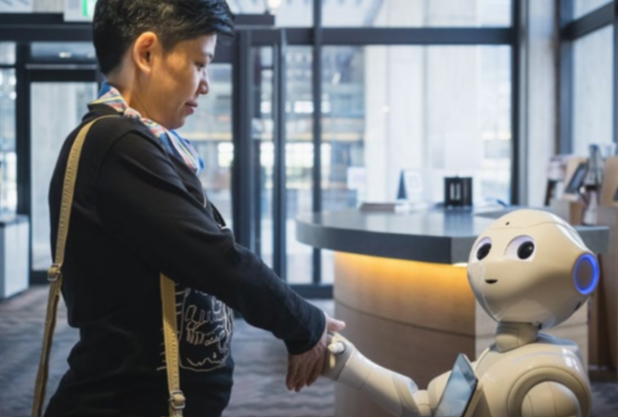
Human warmth and machine efficiency
The researchers warn against a simplistic view of robots uniquely as cost-saving tools. Instead, they argue that robots can advantageously reduce customer anxiety in complex situations, while human staff should be preserved for relational tasks where rapport-building is key.
Training and process design must align with this dual strategy. For instance, service robots could be programmed to initially triage guest inquiries and then escalate to human agents if emotional or nuanced communication is required. In this way, hotels can optimize both efficiency and guest satisfaction.
Ultimately, this research invites the hospitality sector to rethink how human and robotic agents can co-create value in customer service. Rather than viewing robots as a replacement, they should be integrated as part of a complementary service ecosystem that respects both the strengths of technology and the irreplaceable human touch.

– The researchers
Janelle Chan, Ph.D., is an Assistant Professor at the School of Hotel and Tourism Management, Hong Kong Polytechnic University. Her research interests include service management, digital marketing and analytics, and technology integration.

Irene Cheng Chu Chan, Ph.D. is an Assistant Professor at the Macao University of Tourism. Her research interests include social media communication, technology management and hospitality management.

Long W. Lam, Ph.D., is a Professor in the Faculty of Business Administration at the University of Macau. His research interests include decision-making, servicescape, customer mistreatment, and trust.

Rob Law, Ph.D., is the University of Macau Development Foundation Chair Professor of Smart Tourism at Asia-Pacific Academy of Economics and Management. He is also affiliated with the Faculty of Business Administration, University of Macau. Prof. Law’s research interests are mainly in smart tourism and technology management.
– The paper
Chan, J., Chan, I. C. C., Lam, L. W., & Law, R. (2025). Riding on uncertainty: Leveraging human agents and service robots during service delivery. International Journal of Hospitality Management, 125, 104000.
link